

I. Introduction
If you are looking to efficiently handle and manipulate data for your
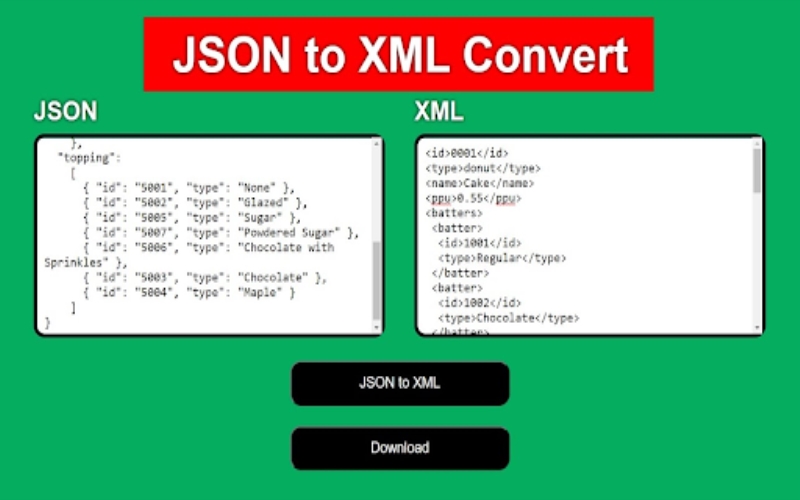
Digital business or personal needs, you may have come across the need to convert XML to JSON (JavaScript Object Notation). In the ever-evolving landscape of data management, XML and JSON have emerged as two fundamental data formats, each with its unique strengths and applications. The world of data conversion, specifically focusing on the conversion of XML to JSON, exploring why it’s necessary, and introducing some gadgets that make this transformation a breeze. To get started, check out this comprehensive guide on the essential tools and techniques you need to know for converting XML to JSON easily and effectively: https://limitlessreferrals.info.
A. Brief Explanation of XML and JSON Data Formats
XML and JSON are both widely-used data formats that serve as intermediaries for information exchange between applications, databases, and various systems. Let’s briefly unpack these formats:
XML (Extensible Markup Language)
XML is a structured markup language that uses tags to define and organize data hierarchically. It has been a cornerstone in data representation and exchange for decades, known for its readability and self-descriptive nature. Elements enclosed in angled brackets (<element>) define the data’s structure, making it human-readable and machine-parsable.
XML is particularly favored in industries where data must maintain a strict hierarchical structure, such as finance, healthcare, and government. However, its verbosity can lead to larger file sizes, making it less efficient for some modern applications.
JSON (JavaScript Object Notation)
JSON, on the other hand, is a lightweight data-interchange format that uses a simple text-based structure to represent data as key-value pairs.Its creators intended for it to be easily understood by both people and computers. JSON’s concise syntax and flexibility have made it the format of choice for web APIs, web services, and modern digital business applications.
The JSON format resembles a dictionary in many programming languages, making it highly adaptable for various programming environments. It excels in scenarios where compactness and speed are paramount.
B. The Need for Converting XML to JSON
While both XML and JSON have their merits, there are times when the conversion from XML to JSON becomes imperative. Here are a few compelling reasons for this transformation:
1. Compatibility with Modern Web Technologies:
Today’s web applications and RESTful APIs predominantly use JSON for data exchange. Converting XML data to JSON allows for seamless integration with these technologies, ensuring compatibility and efficient communication between systems.
2. Improved Efficiency:
XML documents tend to be bulkier due to their verbose nature. JSON, on the other hand, is more concise, resulting in smaller file sizes and faster data transmission. This efficiency can significantly benefit web applications and services, particularly in bandwidth-sensitive environments.
3. Simplified Data Manipulation:
JSON’s structure aligns more closely with data structures used in most programming languages, making it easier to work with in code. When developers need to extract, modify, or manipulate data, JSON’s simplicity streamlines these processes, saving time and reducing complexity.
4. Enhanced Performance:
Converting XML to JSON can lead to improved application performance. JSON parsing is often faster and requires fewer computational resources compared to XML parsing, contributing to a more responsive user experience.
II. Understanding XML and JSON
A. What is XML?
XML, or Extensible Markup Language, stands as one of the foundational data formats in the world of information exchange and data representation. Its structured nature and self-descriptive tags have made it a cornerstone for storing, transporting, and sharing data across various platforms and systems.
1. Definition and Structure
XML, in essence, is a markup language that employs tags to encapsulate and organize data hierarchically. Unlike plain text, which can be challenging for machines to interpret, XML provides a standardized way of presenting information. The main parts are as follows:
Elements: XML data is divided into elements, which are enclosed within opening and closing tags. For example, <book> and </book> define the beginning and end of a book element.
Attributes: Additional information about an element can be provided by its attributes. Attributes are typically included within the opening tag and have a name and a value. For instance, <book genre=”fiction”> denotes a book element with a “genre” attribute set to “fiction.”
Nested Elements: XML allows for the nesting of elements, creating a hierarchical structure. For instance, within a <book> element, you can have nested elements like <title>, <author>, and <published_date>.
Prolog: XML documents often start with a prolog, which provides information about the document’s encoding and version. It appears at the document’s very beginning and is enclosed in <?xml … ?> tags.
CDATA Sections: CDATA (Character Data) sections are used to include character data that should not be parsed as XML elements. This is useful for including text or code snippets that should be treated as plain text.
2. Common Use Cases
XML has found its place in various industries and applications due to its structured and versatile nature. Some common use cases for XML:
Web Services: XML is the foundation for protocols like SOAP (Simple Object Access Protocol) and REST (Representational State Transfer) that enable communication between web services and clients. XML is used to structure data exchanged in these services.
Data Exchange: Many industries, including finance and healthcare, use XML to facilitate data exchange between systems, ensuring that information is structured, easily interpretable, and conforms to industry standards.
Configurations: XML is often used to define configurations in software applications. Configuration files in XML format make it simple for developers to adjust settings and parameters without modifying source code.
Documentation: XML is employed in the creation of documentation, allowing for the structured representation of content. For instance, DITA (Darwin Information Typing Architecture) uses XML for technical documentation.
Data Storage: XML can be used as a storage format for structured data, making it easier to query and retrieve specific information. Databases like Microsoft SQL Server support XML data types.
Publishing: XML is used in the publishing industry to structure content, including books, articles, and scientific papers. XML-based standards like DocBook and TEI (Text Encoding Initiative) are commonly used for this purpose.
III. Conclusion
In the dynamic world of data management, the ability to adapt and optimize data formats can make all the difference. XML, with its structured hierarchy and rich metadata, has served as a stalwart for data representation and exchange. However, Digital business demands efficiency, compatibility, and agility in data handling. This is where the transformation from XML to JSON steps in as a game-changer. JSON’s simplicity, compactness, and ubiquity in web technologies offer a path towards enhanced performance, streamlined processes, and seamless integration. It’s the bridge that connects legacy data structures with the requirements of the digital world. If you’re interested in learning more about data management and optimizing your digital workflow, you can also check out this helpful guide on how to change your Office 365 password
Frequently Asked Questions (FAQ)
1. What is XML to JSON conversion, and why is it important?
XML to JSON conversion is the process of transforming data from XML format into JSON format. It’s essential because it enables compatibility with modern web technologies, improves data efficiency, and simplifies data manipulation, making data more accessible and adaptable for various applications.
2. What are some common tools or gadgets for XML to JSON conversion?
Popular tools for XML to JSON conversion include web-based converters, libraries like Jackson and xml for developers, command-line utilities like ‘xml2json,’ and integrated solutions in data integration platforms.
3. How can I convert XML to JSON without coding or technical expertise?
You can use online XML to JSON converters, which allow you to upload your XML file and receive JSON output instantly, without the need for coding or technical knowledge.
4. Are there benefits to converting XML to JSON for web development?
Yes, converting XML to JSON is beneficial for web development. JSON is the preferred format for web APIs and services, ensuring seamless integration and faster data transmission, which is crucial for responsive web applications.
5. Can I convert large XML files to JSON efficiently?
Yes, you can convert large XML files to JSON efficiently using command-line tools that support batch processing. These tools are designed to handle large volumes of data effectively.
