

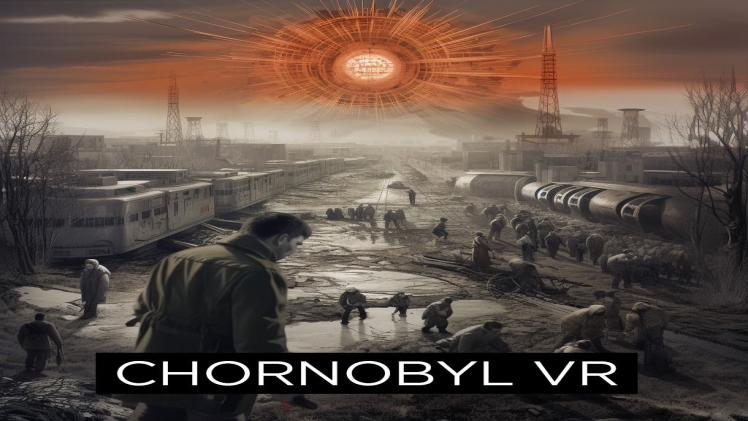
In the immersive realm of documentary cinema, “Chornobyl: Back to the Future” offers an uncharted odyssey through history. As a viewer, one is captivated by the untold secrets of the Chornobyl nuclear disaster and the contemporary struggles faced by the Chornobyl Nuclear Power Plant (CNPP) under Russian occupation in 2022.
Peering into the film’s production, it becomes evident that the dedicated team spent over five years meticulously researching Chornobyl’s multifaceted themes. The digitization of its cultural heritage and artifacts, coupled with avant-garde technologies like laser 3D scanning, unfolds a treasure trove of historical and contemporary footage that was once shrouded in mystery.
In the relentless pursuit of historical accuracy, the production team’s dedication extended beyond the technical aspects. The filmmakers collaborated with historians, scientists, and survivors, ensuring that the narrative unfolded with precision. This commitment to authenticity immerses the audience in an unparalleled educational experience, fostering a deep understanding of Chornobyl’s complex history.
Delving into the innovative technologies employed, it’s worth noting the role of artificial intelligence (AI) in enhancing the storytelling. AI algorithms were employed to analyze vast datasets, reconstructing minute details of Chornobyl’s past. This marriage of human ingenuity and AI prowess not only enriches the documentary’s content but also sets a precedent for the intersection of technology and historical filmmaking.
Stepping into the virtual reality format, the documentary transcends conventional storytelling. As an active participant, viewers are not merely spectators but explorers, virtually reliving the poignant emotions tied to the Chornobyl disaster and recent CNPP events. The profound connection forged between the audience and the narrative is beyond the scope of traditional documentaries.
Considering the film’s inception before the full-scale Russian invasion of Ukraine, one can’t help but ponder the initial vision. Envisaged as a scientific and educational 360-degree stereoscopic video, the focus was on providing a genuine understanding of Chornobyl’s true history. Little did they anticipate the seismic shift in narrative prompted by the Russian occupation of Ukrainian nuclear power plants on February 24, 2022.
From a viewer’s standpoint, the documentary now stands as a powerful testament to the harsh realities of Russian aggression and the looming global nuclear threat. Director Valeriy Korshunov’s questioning of the future in the face of unpunished nuclear terrorism resonates deeply, leaving the audience grappling with the implications.
Reflecting on the presentation of “First Day” at the Venice Biennale, one senses the artistic and cultural impact of the Korshunov duo. As viewers, we are drawn into a world where the boundaries of storytelling are pushed, setting the stage for the anticipated international acclaim of “Chornobyl: Back to the Future.”
With the backing of the Ukrainian Cultural Foundation, the documentary’s imminent availability in Ukrainian and English versions for VR headsets after its film festival debut promises a transformative experience for audiences. As spectators, we anticipate an immersive journey that not only narrates but embeds us in the historical and contemporary realms of Chornobyl, offering a unique perspective on its profound truths.
In examining the broader societal implications, the documentary emerges not only as a historical account but as a catalyst for discourse. The film prompts viewers to contemplate the role of technology in shaping our understanding of historical events. It becomes a conversation starter, encouraging audiences to reflect on the ethical responsibilities of storytellers, the potential of VR in education, and the intersection of art and activism in the digital age. The ripple effects of “Chornobyl: Back to the Future” extend far beyond the confines of the screen, sparking conversations that resonate in academic, cultural, and technological spheres.
