

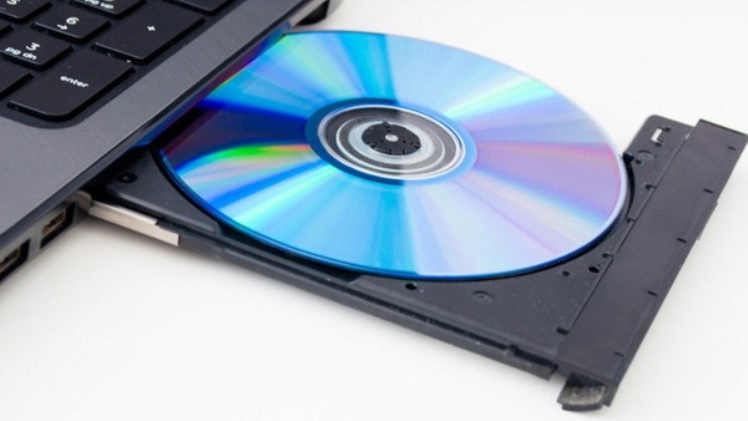
Blu-ray technology has revolutionized the way we record and play back high-quality video content. While Blu-ray discs are commonly used for these purposes, few are acquainted with their inner workings. In this comprehensive article, we will delve into the mechanisms of reading and writing Blu-ray discs, explore the different types of Blu-ray media, discuss the interplay between recording time and video quality, and provide information on how to make secure backups of your Blu-ray content. This valuable resource is designed to enhance your understanding of Blu-ray technology and help you optimi
The Mechanism of Blu-ray Discs – High-Quality Blu-ray
As high-definition video became more prevalent, the demand for new, high-capacity recording media emerged. This demand led to the inception of the Blu-ray disc, a product of extensive research led by Sony in 1991. Let’s start by exploring what Blu-ray is and introducing its features, as well as its intricate reading and writing mechanisms.
Features of Blu-ray Discs:
Blu-ray discs, much like DVDs, are optical discs with a diameter of approximately 12 cm. While they may appear similar, the key distinction lies in their storage capacity. Single-layer single-sided Blu-ray discs offer an impressive capacity of 25 GB each, equivalent to storing approximately five single-layer single-sided DVDs (4.7 GB) on a single Blu-ray disc. For double-layer single-sided discs, the capacity is an even more remarkable 50 GB per disc, enabling you to store about ten single-layer single-sided DVD discs on a single Blu-ray disc ブルーレイ リッピング. This substantial data storage capability not only makes it possible to record high-definition videos but also maintain their original quality.
Reading and Writing Mechanism:
Blu-ray discs utilize a laser beam for both reading and writing data. In the case of Blu-ray, a blue-violet laser with a wavelength of 405 nm is employed. The surface of the disc is adorned with spiral grooves known as “grooves,” which serve as guides for data writing. When writing data, the disc rotates at high speed, and the blue-violet laser follows the grooves, altering the reflectivity (bumps and dips) to record information. Reading data is the reverse process, with the laser beam detecting and extracting the intensity of bumps and dips as digital data.
Types of Blu-ray Discs:
Blu-ray discs can be broadly categorized into two types: data discs and video discs. Data discs, although versatile and capable of recording videos, are primarily designed for data storage. For those who wish to record TV shows or videos, video discs are the more suitable option. Blu-ray discs also come in six different types, each distinguished by capacity, write speed, and other features. Here are the various types and their respective capacities and characteristics:
- BD-R (25GB): Single-sided single-layer disc for one-time data writing.
- BD-R DL (50GB): Single-sided dual-layer disc, offering a larger capacity than BD-R.
- BD-R XL (100GB): Single-sided triple-layer disc, with a larger capacity than BD-R and requiring BDXL-compatible drives.
- BD-RE (25GB): Single-sided single-layer disc for data writing, reading, and rewriting.
- BD-RE DL (50GB): Single-sided dual-layer disc, offering a larger capacity than BD-RE.
- BD-RE XL (100GB): Single-sided triple-layer disc, with a larger capacity than BD-RE DL and requiring BDXL-compatible drives.
Each type of disc has unique characteristics in terms of capacity and read/write specifications. It’s crucial to select discs that align with your recording requirements. The choice should be made with consideration of factors such as capacity and usage. Understand that higher-capacity discs tend to be more expensive, so it’s advisable to choose discs that cater to your specific recording needs.
Relationship Between Recording Time and Video Quality:
Blu-ray discs provide varying recording times depending on their capacity and the chosen video quality mode. It’s important to note that the indicated recording time on a Blu-ray package is typically based on standard quality. If you opt for higher video quality modes, your recording time will be reduced. Conversely, lowering the video quality will extend recording times. The following are the different recording modes and their estimated recording times for Blu-ray discs of varying capacities:
- Recording Mode: Single-Sided (25GB), Double-Sided (50GB), Triple-Sided (100GB)
- DR (Digital Terrestrial HD Broadcasting): Approximately 3 hours, 6 hours, 12 hours
- DR (BS Digital HD Broadcasting): Approximately 2 hours 10 minutes, 4 hours 20 minutes, 8 hours 40 minutes
- DR (BS Digital SD Broadcasting): Approximately 4 hours 20 minutes, 8 hours 40 minutes, 17 hours 20 minutes
- XP (High Quality): Approximately 5 hours 15 minutes, 10 hours 30 minutes, 21 hours
- SP (Standard Quality): Approximately 10 hours 30 minutes, 21 hours, 42 hours
- LP (Long-Time Recording): Approximately 21 hours, 42 hours, 84 hours
- EP (Extended Long-Time Recording): Approximately 42 hours, 84 hours, 168 hours
The DR mode records in the same quality as the broadcast source, leading to shorter recording times due to higher video quality. In contrast, LP and EP modes offer longer recording times but lower video quality. For maintaining consistent video quality while extending recording time, it is recommended to use SP or XP modes. It’s also essential to consider that Blu-ray recorders may have their recording modes with varying characteristics.
Backing up Blu-ray Discs without Quality Loss Using DVDFab Blu-ray Copy:
Backing up Blu-ray disc data is a prudent approach to safeguard your valuable content. While Blu-ray discs are ideal for storing high-quality videos and long-duration content, they are susceptible to scratches and damage, potentially leading to data loss. To mitigate these risks and ensure the protection of your content, making backup copies of your Blu-rays is a wise choice.
DVDFab Blu-ray Copy is a versatile software that works on both Windows and Mac platforms, allowing you to create exact copies of Blu-ray discs without compromising video or audio quality. Commercially sold or rented Blu-ray discs often come with copy protection measures, including AACS and BD+, which can hinder duplication. However, DVDFab Blu-ray Copy can bypass these copy protection mechanisms, enabling you to back up your Blu-ray content to a blank Blu-ray disc, a DVD disc, a folder, or an ISO file.
Notably, DVDFab Blu-ray Copy offers a feature to compress content while preserving the original quality. For instance, if you want to copy a dual-layer (50GB) Blu-ray to a single-layer (25GB) disc, you can do so without sacrificing quality. The software can also automatically retrieve metadata for your copied Blu-ray videos, facilitating organized content management.
How to use DVDFab Blu-ray Copy to make copies of your Blu-ray discs:
- Launch the software and load the Blu-ray disc or source.
- Select the copy mode and output settings.
- Start the Blu-ray copy process.
By using DVDFab Blu-ray Copy, you can ensure the protection of your Blu-ray content and enjoy the convenience of playing it on various devices and platforms. DVDFab Blu-ray Copy offers a free trial for you to explore its features and capabilities.
In conclusion, this article has provided an in-depth look into Blu-ray technology, from its mechanisms and types to the intricate relationship between recording time and video quality. By selecting the right disc type and recording mode, you can tailor your Blu-ray usage to your specific requirements. Additionally, creating secure backups of your Blu-ray content is a prudent strategy, and DVDFab Blu-ray Copy is a powerful tool for this purpose. It offers a free trial, allowing you to experience its functionality before making a commitment to the full version.
