

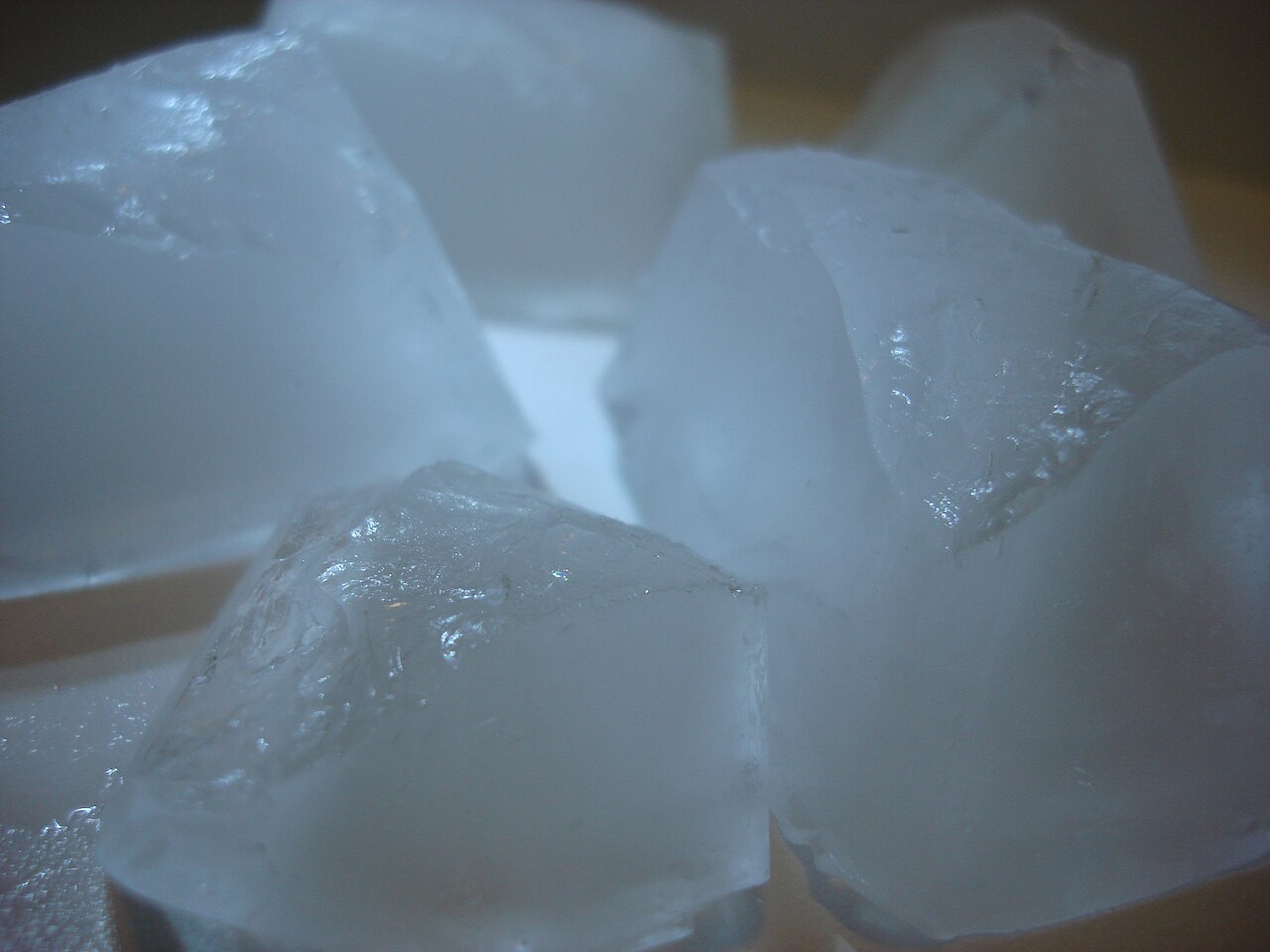
Water turns to ice in your freezer, and the freezer gets to work pulling heat out. That’s the clue. When someone asks whether freezing is exothermic or endothermic as a process, the answer is exothermic. The water releases energy as it becomes solid, even though everything about it feels cold.
Which way does the heat go?
The two words describe the direction of heat flow. Exothermic means heat leaves the thing you’re watching and goes to its surroundings. Endothermic means that heat comes in.
Pick your system first, because that’s where people slip. Here the system is the water. As it freezes, heat moves from the water into the colder air of the freezer. Heat out means exothermic.
The trap is in how it feels. Ice is cold, so we link freezing with “taking in cold.” Cold isn’t a substance that moves, though. There’s only heat, and it’s on its way out.
What the molecules are doing
In liquid water, molecules slide around, forming and breaking hydrogen bonds all the time. In ice, each one settles into a fixed spot and holds on to four neighbors.
Settling into a stable arrangement lowers the energy of the molecules, and the difference has to go somewhere. It leaves as heat. Remember it this way: forming attractions gives energy out, and pulling them apart costs energy.
Melting is the same trip in reverse. You have to put in exactly as much energy to loosen the ice as the water gave up when it froze. For water, that’s about 334 joules per gram, or 6.01 kilojoules per mole. It’s called the heat of fusion, and freezing just carries a minus sign.
Why the temperature stalls
Put a thermometer in a cup of water in the freezer and you’d see something odd. The reading falls to 0 °C, then stays there until the last of the liquid has gone. Only after that does it drop again.
Heat is still leaving during that flat stretch. It’s just being matched by the energy released as the bonds form. If you’ve drawn a cooling curve in class, this is the level part of the line.
You may also see water cool slightly below zero and then jump back up once ice appears. That jump is the released heat showing itself.
Where you can see it for yourself
Farmers use this. On a frosty night they spray their orchards with water, and as it freezes on the buds it gives off enough heat to keep them close to 0 °C. The spraying has to carry on until the danger passes, or the ice will do more harm than good.
Reusable hand warmers work on a similar idea. Click the little metal disc, and the liquid inside, a solution of sodium acetate, crystallizes. The pouch heats up in seconds. You’re feeling a substance turn solid.
Large bodies of water do it slowly. A lake that’s icing over gives heat to the air above it.
Doesn’t the freezer use energy?
It does, and that confuses things. A freezer runs on electricity because moving heat from a cold box to a warm kitchen takes work. Put your hand by the back or side of one and you’ll feel that heat coming out. Some of it came from your ice cubes.
Needing a machine doesn’t make the change endothermic. What counts is the direction the heat moved for the water.
The other changes of state
Freezing, condensation and deposition all bring particles together, so they’re exothermic. Melting, evaporation and sublimation pull them apart, so they’re endothermic. Learn one side and you’ve got the other for free.
That’s why sweat cools you as it evaporates, while steam gives such a nasty burn when it condenses on your skin.
If you want similar either-or questions to practice on, compairro.com has a good stock of them. Name the system, ask where the heat went, and you’ll rarely be wrong.
